In short
A door that jumped its track or has a loose cable is unsafe to run. Leave it where it is and call. In Livingston, a technician secures the door, fixes the cables and rollers, and lines the track up with the opening.
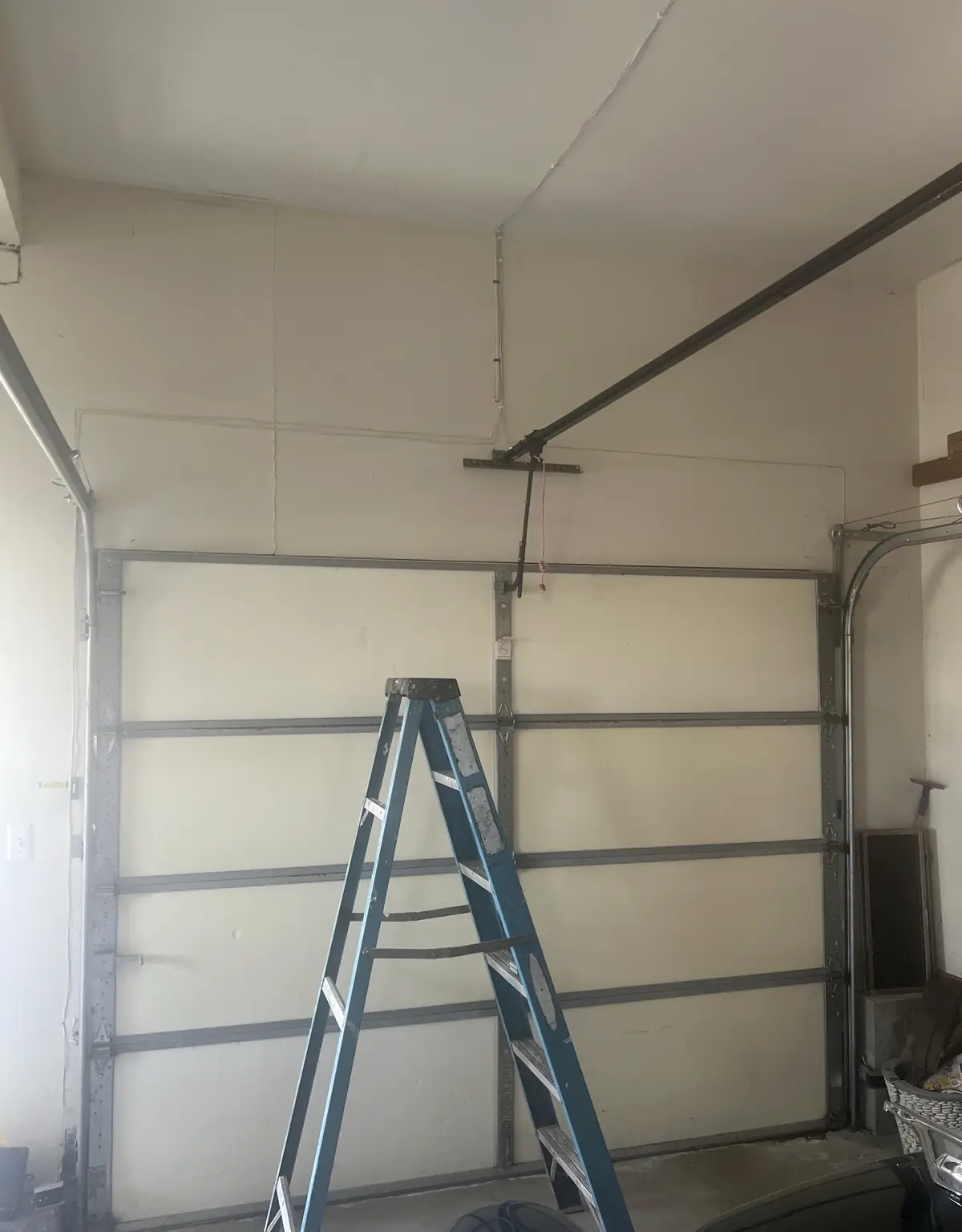
Track problems in Livingston
Tall eight-foot doors on new construction put more leverage on the track, and if the installer rushed, the rails loosen within a few years. A door that rattles or leaves a gap at one top corner needs its track re-secured.
On 1950s garages the usual cause is simpler: worn steel rollers and decades of small bumps. New nylon rollers and trued rails make an old door glide again.
Common causes
- Impact: a backed-in car or a bicycle leaned against the door.
- Cable failure: one side drops when a cable breaks or unspools.
- Worn rollers: cracked or flat rollers ride out of the track.
- Loose track: brackets work loose and the track bends or spreads.
Until it's fixed
Stop using the door and disconnect the opener. A door that's partly out of its track is held up by tension and luck, so don't stand under it or try to force it back in yourself.
On the repair visit
First the door is made safe so it can't fall. Then the technician frees it, sets the rollers back in the rails and checks why it came out: a frayed cable, a cracked hinge, a bent section of track or a loose bracket. Those parts are fixed or replaced, the spring tension is evened out, and the door is cycled a few times with the opener's auto-reverse tested at the end.
Around Livingston
- Mount Pleasant: West side along Mount Pleasant Avenue.
- Hillside: Streets off Hillside Avenue with many rebuilt homes.
See the full Livingston service area.
Questions we hear in Livingston
Our 1950s split-level has a low garage ceiling. Can it take a modern opener?
Yes. Low-headroom track and side-mount openers are designed for it.